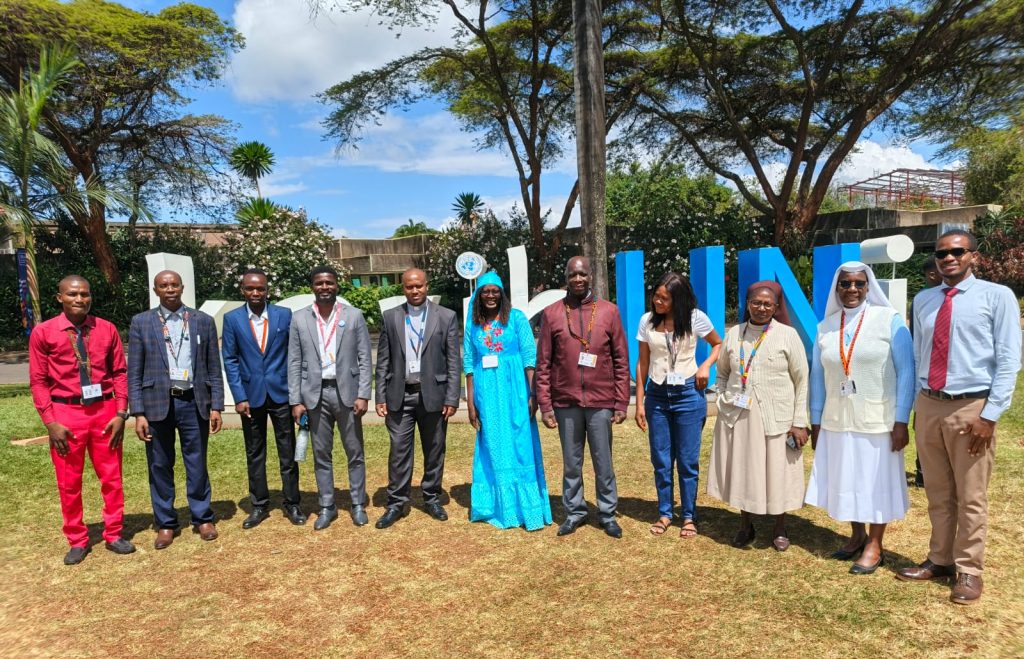
When the World Came Together for a Resilient Planet
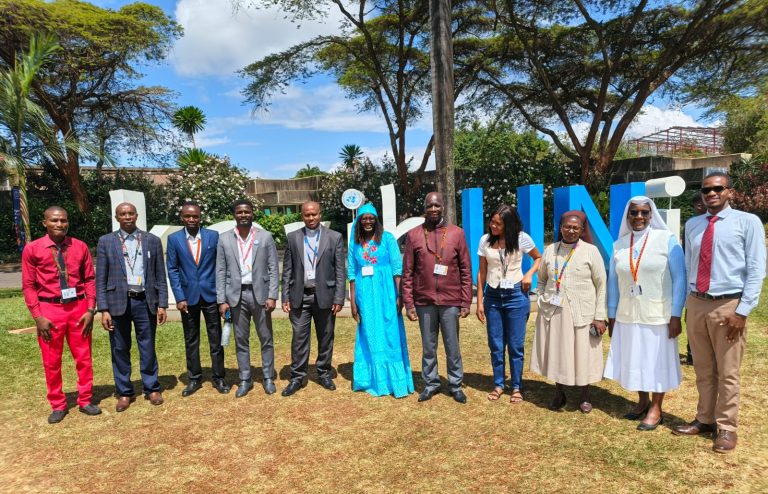
On December 12, 2025, the seventh session of the United Nations Environment Assembly (UNEA-7) came to a close in Nairobi, Kenya. For nearly two weeks, the UN Environment Programme (UNEP) headquarters became a meeting place for hope, urgency, and global solidarity. More than 6,000 participants from 186 countries gathered with one shared understanding: the planet is in crisis, and working together is no longer optional.
As the world grapples with climate change, biodiversity loss, and pollution—the triple planetary crisis UNEA-7 offered a powerful reminder that multilateral cooperation still matters, and it can still deliver.
A Week That Mattered
Under the theme “Advancing sustainable solutions for a resilient planet,” UNEA-7 brought together environment ministers, scientists, civil society, youth leaders, and faith-based organizations. Long before the final gavel fell, critical conversations were already underway. From December 1–5, delegates met during the Open-ended Committee of Permanent Representatives to negotiate the resolutions that would shape global environmental action for years to come.
The energy in Nairobi was unmistakable. These were not just technical discussions—they were conversations about people’s lives, livelihoods, and the future of generations to come.
Faith Voices Calling for a Just Transition
One of the most powerful threads throughout UNEA-7 was the strong presence of faith actors. Faith communities showed up not only with moral clarity, but also with practical solutions rooted in compassion and justice.
On December 9, the Laudato Si’ Movement convened a breakfast side event on “Faith in Action for an Accelerated and Inclusive Renewable Energy Transition.” Delegates from across Africa gathered to reflect on how spiritual values and scientific solutions can work hand in hand to advance clean energy.
Faith leaders called for increased public and grant-based financing for renewable energy and urged governments to redirect subsidies away from fossil fuels toward sustainable alternatives. They emphasized that faith-based organizations are uniquely positioned to reach grassroots communities—where policy decisions are felt most deeply.
Reverend Rachel Mash spoke passionately about the environmental risks facing vulnerable communities, particularly those affected by extractive industries. She challenged faith institutions to lead by example, pointing to churches that are installing solar panels and integrating renewable energy into theological education.
This engagement builds on UNEP’s Faith for Earth Coalition, which recognizes that faith communities can inspire meaningful behavior change and help advance the Sustainable Development Goals through values-based environmental stewardship.
Decisions That Shape the Future
UNEA-7 resulted in the adoption of 11 resolutions and three decisions, addressing some of the most urgent environmental challenges of our time. These included commitments on:
- Protecting coral reefs and glaciers
- Improving the management of minerals and metals critical for the energy transition
- Strengthening chemicals and waste management
- Using Artificial Intelligence responsibly for environmental protection
- Enhancing international cooperation on wildfires
- Addressing antimicrobial resistance
- Responding to sargassum seaweed blooms
- Promoting sustainability through sport
- Increasing children and youth participation in environmental governance
While some proposed resolutions—such as those on deep-sea ecosystems and environmental crimes—did not reach consensus, the outcomes demonstrated that global cooperation, though challenging, remains possible.
A Political Commitment to Act
The UNEA-7 Ministerial Declaration sent a clear signal: governments are committing to bold, inclusive, and equitable environmental action. The declaration emphasized the circular economy, addressing environmental crimes, and ensuring that environmental decision-making leaves no one behind.
For 186 nations, this was more than words—it was a collective promise to turn global agreements into real change on the ground.
Setting the Course: UNEP’s Strategy for 2026–2029
Delegates also approved UNEP’s Medium-Term Strategy for 2026–2029, along with its Programme of Work. The strategy focuses on tackling climate change, biodiversity loss, and pollution together, while promoting resource efficiency and circular solutions.
This roadmap offers a clear direction for UNEP’s work in the coming years—and a framework for countries to align their national actions with global priorities.
When Science Speaks, Policy Must Listen
One of the most anticipated moments of UNEA-7 was the launch of the Global Environment Outlook 7 (GEO-7). Compiled by 287 scientists from 82 countries, the report paints a stark but hopeful picture.
Its message is clear: investing in a stable climate, healthy ecosystems, and a pollution-free planet is not only possible—it makes economic sense. According to GEO-7, such investments could generate trillions in global GDP, prevent millions of premature deaths, and lift hundreds of millions of people out of poverty and hunger.
Youth, Indigenous Peoples, and Cities at the Table
UNEA-7 was not just about governments. Over 1,000 young people took part in the Youth Environment Assembly, calling for meaningful participation in shaping environmental decisions. For the first time, a Special Dialogue on the Role of Indigenous Peoples was held, alongside the Cities and Regions Summit and the Global Major Groups and Stakeholders Forum.
These spaces reflected a growing recognition that solving environmental crises requires everyone—youth, Indigenous communities, local governments, and civil society—working together.
Leadership Beyond the Negotiation Rooms
UNEA-7 President Abdullah bin Ali Al-Amri reminded delegates that success would not be measured by resolutions alone, but by real change: cleaner air and water, restored ecosystems, green jobs, and more resilient communities.
In her closing remarks, UNEP Executive Director Inger Andersen issued a heartfelt call for action, urging Member States to fully fund UNEP’s work. She reminded the Assembly that environmental degradation is not abstract—it destroys livelihoods, deepens inequality, and costs lives every day.
Looking ahead, Jamaica’s Minister of Water, Environment and Climate Change, Matthew Samuda, was elected President of UNEA-8, set for December 6–10, 2027, in Nairobi. He pledged to champion inclusivity, transparency, strong science-policy links, and increased financing for adaptation.
From Promises to Practice
As UNEA-7 came to an end, one message stood out: this is not the finish line—it is the starting point. The real work begins now, as countries, organizations, and communities turn commitments into action.
From faith leaders calling for a just energy transition, to young people demanding a seat at the table; from scientists presenting hard evidence, to ministers making political commitments—UNEA-7 showed what is possible when the world comes together with shared purpose.
As Inger Andersen described it, environmental multilateralism remains a beacon of hope. The task ahead is to ensure that its light reaches every community, guiding us toward a healthier, more just, and truly sustainable future for all.




About the Author